THE SACRAMENT OF BAPTISM
Come now, let us settle the matter,” says the LORD.
“Though your sins are like scarlet, they shall be as white as snow;
though they are red as crimson, they shall be like wool.
Isaiah 1, 18
For I will pour water on the thirsty land,
and streams on the dry ground;
I will pour out my Spirit on your offspring,
and my blessing on your descendants.
Isaiah 44, 3
I will sprinkle clean water on you, and you will be clean; I will cleanse
you from all your impurities and from all your idols. I will give you a new
heart and put a new spirit in you; I will remove from you your heart of stone
and give you a heart of flesh. And I will put my Spirit in you and move you
to follow my decrees and be careful to keep my laws.
Ezekiel 36, 25-27
And that is what some of you were. But you were washed,
you were sanctified, you were justified in the name of the LORD
Jesus Christ and by the Spirit of our God.
2 Corinthians 6, 11
The verse from Isaiah 1:18 carries profound significance in the context of Catholic baptism. In this passage, God invites His people to come and reason together, highlighting His readiness to forgive and transform them despite their sins. The imagery of sins being “like scarlet” and then converted to “white as snow” symbolizes purification and redemption. In Catholic theology, baptism represents this very transformation. It is viewed as a sacrament of initiation into the Christian faith, in which the individual is cleansed of original sin and personal sins. The act of being submerged in water, or having water poured over the head, signifies the washing away of sin and the beginning of a new life in Christ.
Comparing sins to scarlet underscores the severity and visibility of wrongdoing, while their transformation into white symbolizes the grace and mercy of God. This reflects the Catholic belief that, through baptism, individuals are not only forgiven but also made pure and incorporated into the Church, often referred to as the Mystical Body of Christ. Furthermore, the image of wool suggests a soft, renewed state of being, emphasizing that baptism is not just about forgiveness; it is about being made new. Just as wool is a product that undergoes processing to become pure and white, so too does a baptized person undergo a spiritual renewal, signifying their commitment to live in accordance with Christ’s teachings.
The text from Isaiah 44:3 speaks of God’s promise to pour water on thirsty land and to pour out His Spirit on His people. This imagery can be richly connected to the Catholic sacrament of baptism in several meaningful ways.
First, pouring water symbolizes purification and renewal. In baptism, water represents the cleansing of sin and the beginning of a new life in Christ. Just as the land that is thirsty and dry is refreshed and revitalized by water, individuals undergoing baptism are spiritually rejuvenated. They move from a state of spiritual dryness to one of renewed vitality and grace, allowing them to enter into a relationship with God.
Second, the pouring out of God’s Spirit upon the offspring and descendants highlights the sacrament’s communal and generational aspects. Baptism is not only an individual sacrament; it also initiates individuals into the Church’s larger community. This outpouring of the Spirit signifies the gift of the Holy Spirit received at baptism, empowering the baptized to live as children of God and to participate actively in the life of the Church. Moreover, the connection of blessings to descendants reflects the belief in the importance of baptism for future generations. The sacrament is often seen as a stepping stone for families, creating a legacy of faith and commitment to God. In baptism, parents are invited to raise their children in the faith, instilling in them the teachings and blessings of Christianity.
The text from Ezekiel 36:25-27 addresses themes of purification, transformation, and divine renewal, which closely align with the Catholic sacrament of baptism. In baptism, individuals experience a spiritual cleansing that echoes the promise of being sprinkled with clean water. This metaphorical act of washing signifies the washing away of sin and impurities, much like the water in Ezekiel serves as a cleansing agent for the people. When God promises to give a “new heart” and a “new spirit,” it reflects the transformative nature of baptism. In the Catholic understanding, baptism is not only a ritual of initiation into the Christian faith but also a profound spiritual transformation. The recipient receives the Holy Spirit, symbolizing a shift from a “heart of stone”—indicative of stubbornness and sinfulness—to a “heart of flesh,” signifying openness to God’s will and a capacity for love and compassion.
Furthermore, the promise to put His Spirit within us and to guide us towards observing His decrees aligns with the Catholic belief that, through baptism, individuals are empowered to live according to God’s laws. The Holy Spirit, received during baptism, acts as a guide, helping the baptized to follow Christ’s teachings and embrace a life of discipleship. Thus, Ezekiel captures the essence of what baptism represents in the Catholic tradition: a cleansing from sin, a transformed heart, and the indwelling of the Holy Spirit, prompting a life lived in accordance with God’s desires. This sacrament marks the beginning of a person’s journey of faith, symbolizing a fresh start and communion with God.
The text from 1 Corinthians 6:11 highlights a transformative journey that reflects core beliefs in Catholic theology, particularly regarding the sacrament of baptism. It underscores the concepts of being “washed,” “sanctified,” and “justified” in the context of one’s faith in Jesus Christ and the role of the Holy Spirit. In Catholic teaching, baptism is often referred to as a cleansing from sin. The water in baptism symbolizes purification, washing the individual clean of original sin and personal sins. This aligns with the idea of being “washed” in the text, indicating a fresh start in one’s spiritual life.
To be sanctified means to be set apart as holy. Baptism not only cleanses but also initiates the baptized into the community of the Church, making them members of the Body of Christ. It signifies a lifelong commitment to holiness and living in accordance with God’s will. This process sets the stage for ongoing sanctification through the sacraments and a life of faith. Justification refers to being made right with God, a key aspect of the Catholic understanding of salvation. Through baptism, believers are reconciled with God and receive grace, enabling them to live in accordance with His commandments. This justification is understood as both a one-time event at baptism and an ongoing process as one grows in faith.
According to the biblical account, Adam and Eve experienced spiritual death after eating from the forbidden tree of knowledge, which was against God’s command (Gen 2:17). This act of disobedience resulted in a spiritual deprivation of sanctity and justice that is believed to be passed down to all their biological descendants. As a consequence of original sin, humanity is predisposed to sin and often succumbs to sinful behaviors due to their corrupting influence. The Old Testament reflects this understanding, as Job 14:1, 4 states, “Man that is born of a woman is of few days and full of trouble. Who can bring a clean thing out of an unclean?” This highlights the belief that all humanity, including infants and young children, carries the stain of original sin through natural propagation.
In expressing his acknowledgment of sin, David states, “I was brought forth in iniquity, and in sin did my mother conceive me” (Ps 51:5). This passage suggests that David recognizes he was not born into a state of innocence but instead has an inherent sinful nature from conception. Additionally, Jesus teaches that personal sins stem from the heart (Mt 15:18-20), emphasizing the internal origins of our actions. Consequently, humanity inherits the sin of Adam at the moment of conception, highlighting the necessity of baptism from infancy to address our sinful condition and seek salvation.
The Apostle Paul explains that sin entered the world through one individual, Adam, who introduced death (Rom 5:12). This teaching highlights humanity’s inclination towards evil. It emphasizes the necessity of God’s grace to restore a right relationship with Him. Because of Adam’s sin, both spiritual and physical death have affected all of humanity, implicating everyone in this original fall from grace. All people share in the condemnation that Adam and Eve faced (Rom 5:16). Furthermore, Paul states that “by one man’s disobedience many were made sinners” (Rom 5:19), affirming the doctrine of original sin as an inherent aspect of the human experience. Central to this discourse is the belief that only God incarnate could provide atonement for humanity’s sins through His ultimate sacrifice. Thus, while death entered the world through Adam, life was renewed for humanity through Christ, often referred to as the new Adam (1 Cor 15:21).
Humanity was considered spiritually dead due to sin, characterized by disordered desires and passions. This state persisted until Christ made His ultimate sacrifice, which atoned for sin and reconciled humanity with the Father. By this sacrifice, He also earned the graces and gifts of the Holy Spirit, which are essential for healing and restoring our relationship with God, as highlighted in Ephesians 2:1-3. Baptism is crucial in this process, as it grants individuals the initial grace of forgiveness and righteousness that Jesus has earned. Through this sacrament of initiation, believers are said to die with Christ, thereby allowing them, through the work of the Holy Spirit, to be raised to new life, echoing the message of Romans 6:4.
Through the sacrament of baptism, we transform our relationship with suffering and death. By uniting our suffering and death with Christ’s, the penalties associated with original sin become a pathway to salvation rather than a futile experience. In baptism, we participate in a profound spiritual reality, symbolically dying with Christ to ensure our resurrection with him on the last day, as referenced in Colossians 2:12. It is essential to understand that baptism is not merely a symbolic ritual but a valid sacrament that signifies an actual spiritual transformation occurring in the physical realm.
Baptism restores individuals to the original state of justice and holiness that was lost by humanity’s primordial forefather. Through baptism with water and the Spirit, the gateway to heaven becomes accessible. The cleansing effect of baptism leads to our sanctification and justification. By being baptized in Christ, individuals “put on Christ,” who is not merely a symbol, but a living presence in our souls. This union enables believers to become righteous and pure, mirroring the righteousness and purity of Christ, and is facilitated by the work of the Holy Spirit and the various gifts of grace bestowed upon us (Gal 3:27; 1 Jn 3:3, 7). Through baptism, individuals are reborn from above and embraced as children of God.
The Sacrament of Baptism plays a crucial role in applying the salvation that Christ has achieved for all humanity on a personal level. According to St. Paul in Titus 3:5-7, we are saved by “the washing of regeneration and renewal in the Holy Spirit,” which God generously pours upon us through Jesus Christ. This sacrament is considered salvific because it regenerates the soul, cleansing it from the stain of sin. The Holy Spirit justifies us by infusing grace, thereby bringing about an interior transformation essential for salvation. Through this transformation, individuals become heirs of eternal life and are recognized as adopted children of God, participating in the divine image. Baptism signifies the beginning of a new relationship with God and a renewed life in Christ. By receiving this sacrament, we can merit eternal life through acts of grace and charity, as noted in Ephesians 2:8-10. Consequently, our righteous deeds become essential for fully realizing the gift of salvation, which is made complete through Christ’s redeeming merits.
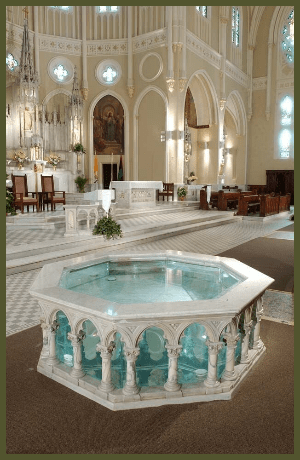
Hence, Baptism serves a dual purpose: it offers forgiveness of sins and facilitates regeneration. It is essential to understand that justification and sanctification are closely linked. Through baptism, our relationship with God is restored to its intended state, which was disrupted by Adam’s fall from grace. The New Testament emphasizes that baptism cleanses the heart of an evil conscience, as noted in Hebrews 10:22. This clean conscience arises from genuine repentance and spiritual renewal.
Additionally, the gifts of the Holy Spirit play a vital role in transforming our inner disposition. With the forgiveness granted through baptism comes a process of inner cleansing and healing. According to St. Paul, without the help of the Holy Spirit, it is impossible to shed the old self and embrace the new self. Thus, baptism is not merely concerned with the outward aspects of salvation but focuses on our inner lives. It can be seen as the “circumcision” of the heart, as described in Colossians 2:11-12, signifying a profound spiritual transformation within the New Covenant.
EARLY SACRED TRADITION

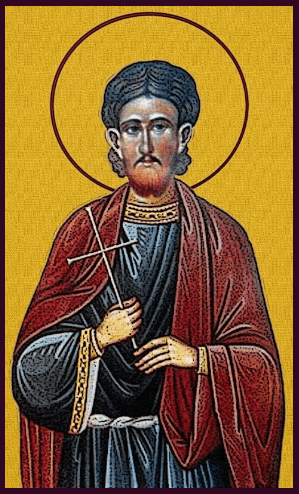
Justin Martyr, First Apology, 61
(A.D. 155)
For Christ also said, ‘Except ye be born again, ye shall not enter into the kingdom of heaven.’ Now, that it is impossible for those who have once been born to enter into their mothers’ wombs, is manifest to all. And how those who have sinned and repent shall escape their sins, is declared by Esaias the prophet, as I wrote above; he thus speaks: ‘Wash you, make you clean; put away the evil of your doings from your souls; learn to do well…And though your sins be as scarlet, I will make them white like wool; and though they be as crimson, I will make them white as snow…And for this [rite] we have learned from the apostles this reason. Since at our birth we were born without our own knowledge or choice, by our parents coming together, and were brought up in bad habits and wicked training; so that we may not remain the children of necessity and of ignorance, but may become the children of choice and knowledge, and may obtain in the water the remission of sins formerly committed, there is pronounced over him who chooses to be born again, and has repented of his sins, the name of God the Father and Lord of the universe; he who leads to the layer the person that is to be washed calling him by this name alone…And this washing is called illumination, because those who learn these things are illuminated in their understanding. And in the name of Jesus Christ, who was crucified under Pontius Pilate, and in the name of the Holy Ghost, who through the prophets foretold all things about Jesus, he who is illuminated is washed.”
Theopilus of Antioch, To Autolycus, 2:16
(A.D. 181)
“Moreover, the things proceeding from the waters were blessed by God, that this also might be a sign of men’s being destined to receive repentance and remission of sins, through the water and laver of regeneration,–as many as come to the truth, and are born again, and receive blessing from God.”
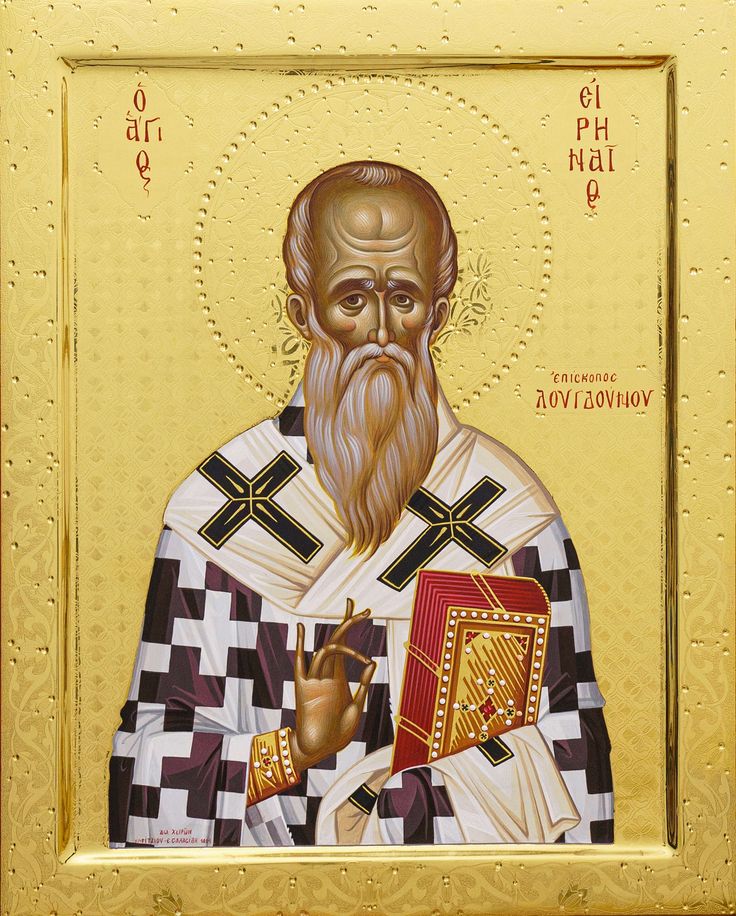
Irenaeus of Lugdunum (Lyons), Fragment, 34
(A.D. 190)
” ‘And dipped himself,’ says [the Scripture], ‘seven times in Jordan.’ It was not for nothing that Naaman of old, when suffering from leprosy, was purified upon his being baptized, but it served as an indication to us. For as we are lepers in sin, we are made clean, by means of the sacred water and the invocation of the Lord, from our old transgressions; being spiritually regenerated as new-born babes, even as the Lord has declared: ‘Except a man be born again through water and the Spirit, he shall not enter into the kingdom of heaven.’”
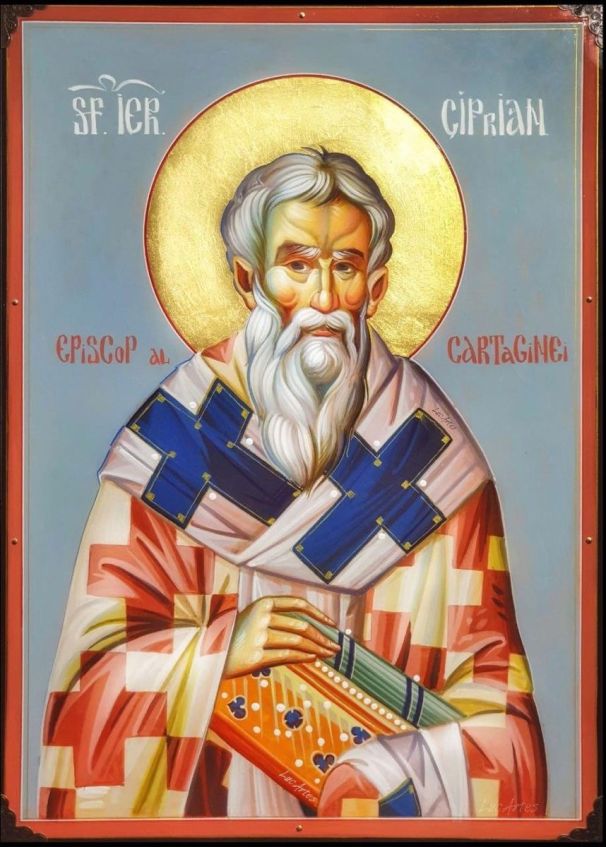
Cyprian of Carthage, Epistle to Fidus, 68[64]:5
(c. A.D. 250)
“If, in the case of the worst sinners and of those who formerly sinned much
against God, when afterward they believe, the remission of their sins is granted
and no one is held back from Baptism and grace, how much more, then, should
an infant not be held back, who, having but recently been born, has done no sin,
except that, born of the flesh according to Adam. He has contracted the
contagion of that old death from his first being born. For this very reason does
he approach more easily to receive the remission of sins: because the sins forgiven
him are not his own but those of another [from Adam].”
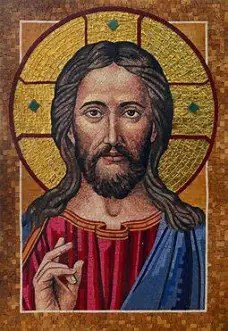
He that believeth and is baptized shall be saved:
but he that believeth not shall he condemned.
Mark 16, 16
PAX VOBISCUM
 All About Catholicism