THE DEVELOPMENT OF DOCTRINE
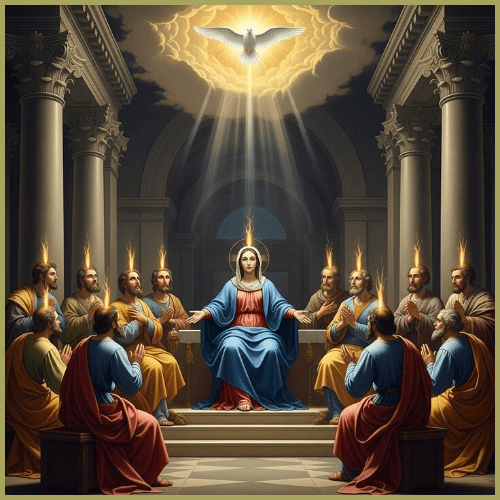
“I have much more to tell you, but you cannot bear it now. But when he comes, the Spirit of truth, he will guide you to all truth. He will not speak on his own, but he will speak what he hears and will declare to you the things that are coming. He will glorify me, because he will take from what is mine and declare it to you. Everything that the Father has is mine; for this reason, I told you that he will take from what is mine and declare it to you.”
John 16:12-15
The passage from John 16:12-15 holds great significance within the context of the development of doctrine in the Catholic tradition. In this scriptural passage, Jesus speaks to His disciples about the forthcoming presence of the Holy Spirit, emphasizing His role as a guide to all truth. This assurance is crucial, as it signifies that while Jesus departs from the earthly realm, the Holy Spirit will continue to illuminate and deepen the Church’s understanding of divine revelation.
Moreover, this text underscores the concept of continuity in revelation, suggesting that God’s truth is not static but unfolds over time through the guidance of the Holy Spirit. This dynamic process deepens understanding of Christian teachings and encourages believers to engage with their faith intellectually and spiritually. Thus, John 16:12-15 is not just a promise of guidance; it establishes a theological foundation for the ongoing interpretation and development of doctrine within the Catholic faith.
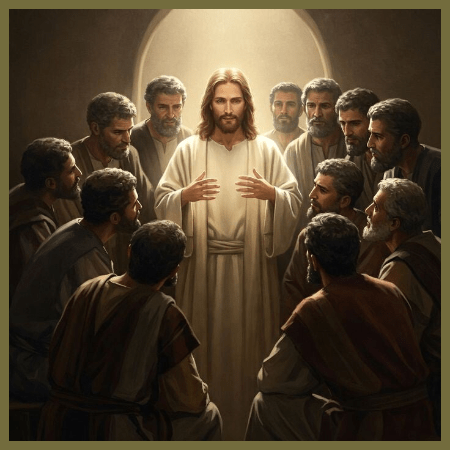
The text articulates a promise of guidance through the Holy Spirit, referred to as the “Spirit of truth.” This characterization is vital within Catholic theology, where the Holy Spirit is not only a comforter but also an active presence within the Church, imparting wisdom and discernment regarding its teachings and doctrines. The assurance that the Spirit will lead the faithful toward truth underscores the belief that understanding of religious doctrine is not static but can deepen and expand over time through divine assistance. This dynamic process encourages believers to engage in ongoing reflection and learning, affirming the Church’s commitment to exploring the depths of faith and revealing deeper insights into its teachings as they are illuminated by the guidance of the Holy Spirit. Through this lens, the role of the Holy Spirit is essential to the life of the Church, guiding it through historical challenges and fostering a continuous journey toward spiritual truth and the fullness of divine revelation.
The notion that Jesus has “much more to tell” implies that divine revelation is not static but an ongoing, dynamic process that unfolds over time. This understanding resonates deeply with Catholic teaching on the development of doctrine, which asserts that the Church’s comprehension of faith can expand and evolve in response to various factors, including new historical contexts, theological insights, and the continuous guidance of the Holy Spirit.
This principle acknowledges that as humanity encounters different challenges, cultural shifts, and moral dilemmas, the Church is called to interpret and apply the original truths of the Gospel in fresh ways. The development of doctrine, therefore, enables a deeper appreciation of divine truths as believers engage with contemporary issues while remaining grounded in the faith’s fundamental teachings. This process underscores the belief that God’s revelation is not limited to the past but actively participates in the life of the Church today, continually inviting believers to discover more profound dimensions of their faith.
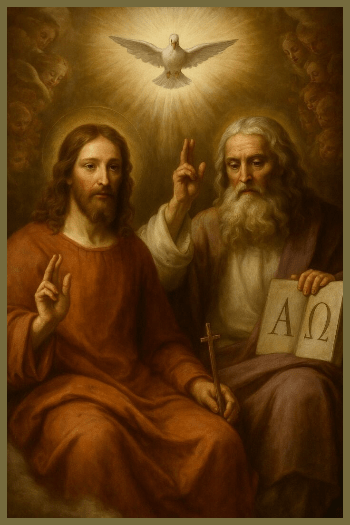
The passage emphasizes the intertrinitarianity of the Father, the Son, and the Holy Spirit, illustrating that all divine revelation originates from a single, unified source. This essential unity is a cornerstone of Catholic tradition, in which beliefs and doctrines are not merely the product of individual interpretations; instead, they are deeply rooted in the collective wisdom derived from centuries of Church tradition, the sacred Scriptures, and the magisterium, which represents the Church’s teaching authority. This intricate relationship among the three divine persons underscores the importance of understanding the Trinity as a cohesive whole, reinforcing the belief that any truth revealed is a manifestation of this divine unity and guiding the faithful towards a deeper comprehension of their spiritual heritage and the Church’s teachings.
The role of the Holy Spirit in glorifying Christ, articulated in the phrase “he will glorify me,” underscores the fundamental principle that any authentic understanding and progression of Christian doctrine must consistently honor and accurately reflect the teachings and works of Jesus. This highlights the importance of aligning theological advancements with the essence of Christ’s message, which emphasizes love, grace, and truth. As doctrine evolves over time to address new contexts and challenges within the Church and the world, it must remain anchored in the core truths of the faith—such as the divinity of Christ, the importance of his sacrificial death and resurrection, and the promise of eternal life—revealed through Christ himself. In this way, the Holy Spirit serves not only as a guide but also as the active agent, ensuring that the Church’s teachings remain faithful to the foundational tenets of Christianity and preserve the integrity of the faith for future generations.
The phrase “he will take from what is mine and declare it to you” signifies that the truths imparted by the Holy Spirit are intended for communal understanding rather than isolated personal interpretation. This emphasizes the importance of sharing insights within the Christian community, highlighting the Catholic Church’s belief in its role as the body of Christ. This communal aspect is essential in the exploration and articulation of faith, as it fosters a shared journey in understanding God’s revelations. The Holy Spirit thus acts as a conduit, guiding not only individuals but also the entire Church in deepening faith and fostering spiritual growth. In this context, the Church serves as a vital entity where believers come together, supporting one another in their faith and collectively engaging with the teachings of Christ and the Scriptures.
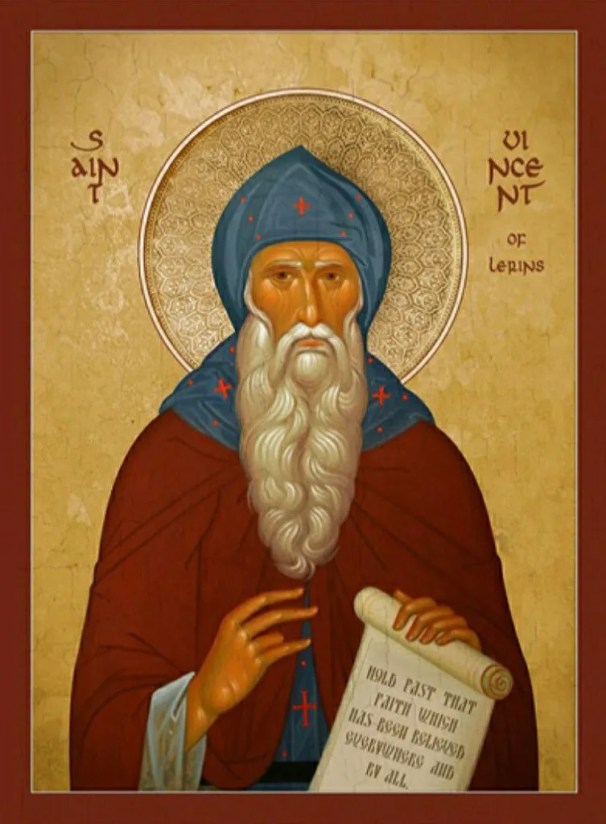
Vincent of Lerins was a 5th-century early Christian writer and theologian. He is best known for his work “Commonitorium,” in which he discusses the importance of tradition in the Christian faith. Vincent emphasized the necessity of adhering to the Church’s teachings, particularly those consistently held by the faithful throughout history. His principles, often summarized as “what has been believed everywhere, always, and by all,” have had a lasting impact on theological discussions and the understanding of orthodoxy in Christianity. Vincent is also regarded as a saint in both the Roman Catholic and Eastern Orthodox traditions. Vincent of Lerins provides a significant insight into the development of doctrine within the Christian faith. He is known for distinguishing between genuine development and perversion or alteration of doctrine.
Vincent emphasizes that genuine development of doctrine is an organic process, signifying that it should evolve from the foundational sources of faith while remaining aligned with the Church’s teachings. He employs the analogy of a seed growing into a mature plant to illustrate this concept; the later developments must preserve the core essence of the initial teachings. According to Vincent, this growth should enhance and elucidate the faith without contradicting the original beliefs.
Vincent cautions against making alterations that could distort the original meaning or intention of doctrinal truths. He stresses that modifications should not depart from the fundamental truths of Christianity. One of his key contributions is the formulation of the “Vincentian Canon,” which asserts that authentic Catholic belief is characterized by that which has been universally accepted, consistently upheld throughout history, and embraced by the entire Church. This principle provides a valuable framework for assessing the fidelity of developments in Church doctrine.
Vincent’s reflections underscore the importance of safeguarding established doctrines against the influence of individual or contemporary trends that could lead to reinterpretations deviating from traditional beliefs. His teachings provide a framework for the Church, emphasizing that while doctrinal understanding may develop over time, it should remain rooted in the foundational truths of the faith that have been preserved throughout history.
EARLY SACRED TRADITION
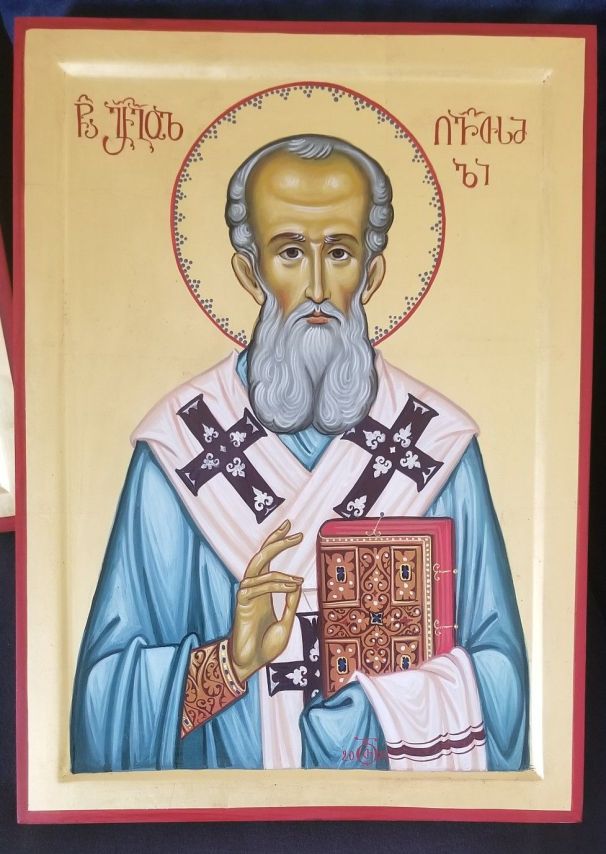
Irenaeus, Against Heresies, 3:24 (A.D. 180)
“But it has, on the other hand, been shown, that the preaching of the Church is everywhere consistent, and continues in an even course, and receives testimony from the prophets, the apostles, and all the disciples…For in the Church,” it is said, “God hath set apostles, prophets, teachers,’ and all the other means through which the Spirit works; of which all those are not partakers who do not join themselves to the Church, but defraud themselves of life through their perverse opinions and infamous behaviour. For where the Church is, there is the Spirit of God; and where the Spirit of God is, there is the Church, and every kind of grace; but the Spirit is truth.”

Hippolytus, Christ and Anti-Christ, 59 (A.D. 200)
“But we who hope for the Son of God are persecuted and trodden down by those unbelievers. For the wings of the vessels are the churches; and the sea is the world, in which the Church is set, like a ship tossed in the deep, but not destroyed; for she has with her the skilled Pilot, Christ. And she bears in her midst also the trophy (which is erected) over death; for she carries with her the cross of the Lord…As the wind the Spirit from heaven is present, by whom those who believe are sealed: she has also anchors of iron accompanying her, viz., the holy commandments of Christ Himself, which are strong as iron. She has also mariners on the right and on the left, assessors like the holy angels, by whom the Church is always governed and defended.”
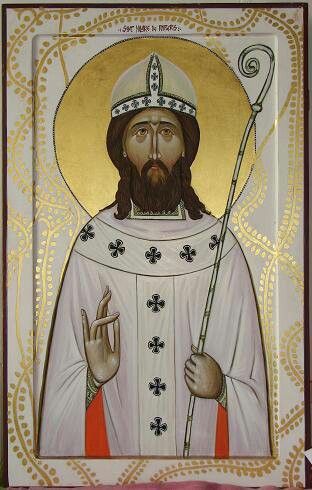
Hilary of Poitiers, On the Trinity, 7:4 (A.D. 359)
“The Church, ordained by the Lord and established by His Apostles, is one for all; but the frantic folly of discordant sects has severed them from her. And it is obvious that these dissensions concerning the faith result from a distorted mind, which twists the words of Scripture into conformity with its opinion, instead of adjusting that opinion to the words of Scripture. And thus, amid the clash of mutually destructive errors, the Church stands revealed not only by her own teaching, but by that of her rivals. They are ranged, all of them, against her; and the very fact that she stands single and alone is her sufficient answer to their godless delusions. The hosts of heresy assemble themselves against her; each of them can defeat all the others, but not one can win a victory for itself. The only victory is the triumph which the Church celebrates over them all.”
Vincent of Lerins, Commonitory for the Antiquity and Universality of the Catholic Faith, 59-60
(A.D. 450)
“But the Church of Christ, the careful and watchful guardian of the doctrines deposited in her charge, never changes anything in them, never diminishes, never adds, does not cut off what is necessary, does not add what is superfluous, does not lose her own, does not appropriate what is another’s, but while dealing faithfully and judiciously with ancient doctrine, keeps this one object carefully in view…This, I say, is what the Catholic Church, roused by the novelties of heretics, has accomplished by the decrees of her Councils,–this, and nothing else,–she has thenceforward consigned to posterity in writing what she had received from those of olden times only by tradition, comprising a great amount of matter in a few words, and often, for the better understanding, designating an old article of the faith by the characteristic of a new name…What but the Catholic and universal doctrine, which has continued one and the same through the several successions of ages by the uncorrupt tradition of the truth and so will continue for ever–‘Receive him not into your house, neither bid him Godspeed, for he that biddeth him Godspeed communicates with him in his evil deeds.’”
PAX VOBISCUM
 All About Catholicism