JUSTIFICATION & SANCTIFICATION
But when the kindness and generous love of God our savior appeared,
not because of any righteous deeds we had done but because of his mercy,
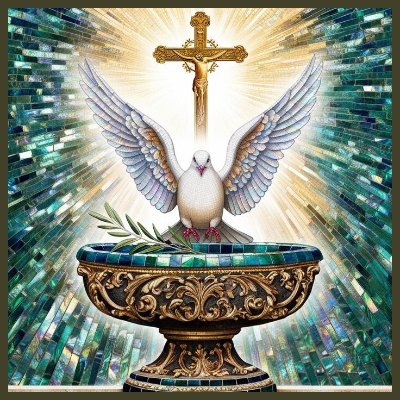
he saved us through the bath of rebirth and renewal by the Holy Spirit,
whom he richly poured out on us through Jesus Christ our savior, so that
we might be justified by his grace and become heirs in hope of eternal life.
Titus 3, 4-7
Paul’s Epistle to Titus 3:4-7 emphasizes several key theological themes central to Catholic teaching, particularly regarding salvation, grace, and the nature of God. The text begins by highlighting the “kindness and generous love of God our Savior,” which reflects the core belief in God’s nature as loving and merciful. This kindness is not based on human merit or righteous deeds, but solely on God’s mercy. This underscores the fundamental Catholic understanding that salvation is a gift rather than something earned through good works.
Titus 3:4-7 emphasizes the transformative power of God’s salvation, stating that humanity is saved “through the bath of rebirth and renewal by the Holy Spirit.” This phrase is widely interpreted as referring to the sacrament of baptism, which is integral to Catholic theology and salvation. In the Catholic tradition, baptism is viewed not only as a ritual act but also as a means of divine grace. It is believed to cleanse the individual from original sin, which, according to Catholic doctrine, is inherited from Adam and Eve’s disobedience.
Additionally, baptism represents a profound rebirth into the Christian faith, marking the believer’s formal entry into the Church and their incorporation into the Body of Christ. This sacrament is often accompanied by the invocation of the Holy Spirit, symbolizing spiritual renewal and empowerment for the Christian life. The communal aspect of baptism highlights its role in building up the Church by fostering a sense of belonging among the faithful.
The text highlights the Holy Spirit’s “richly poured out” work among believers, underscoring the abundance and generosity of God’s grace. In Catholic teaching, the role of the Holy Spirit is pivotal in both the Church’s communal life and each believer’s personal journey. The Holy Spirit is seen as the divine guide, leading individuals towards truth and holiness, sanctifying them through the sacraments, and renewing their hearts and minds to reflect Christ more fully.
This renewal by the Holy Spirit is not a one-time event; it symbolizes the ongoing process of sanctification each believer undergoes throughout their spiritual life. This ongoing transformation encourages individuals to strive for a deeper relationship with God, fostering virtues such as love, patience, and humility. The presence of the Holy Spirit is also a source of inspiration and strength, empowering believers to actively live out their faith and serve others in love, thereby embodying the teachings of Christ in their daily lives.
In Catholic theology, sanctification is the transformative process by which a person is made holy and conformed to the image of Christ. It is closely tied to justification, the act of being declared righteous in God’s eyes. Sanctification involves both the internal renewal of the believer and the external expression of faith through good works in charity and grace. This process is made possible by the grace of God, primarily through the sacraments, prayer, and the ongoing cooperation of the individual’s will. Thus, sanctification is a crucial principle that underpins and enriches the understanding of justification, emphasizing that true justification leads to a life of holiness and virtue.
Titus 3:7 asserts that we are “justified by his grace,” underscoring a foundational aspect of Catholic doctrine on justification. This doctrine teaches that while individuals can respond to God’s grace through both faith and good works, it is ultimately God’s grace alone that justifies and saves us. This perspective aligns with the Catholic understanding that faith and works are not separate or conflicting but are inherently intertwined in the process of salvation. Faith is seen as the initial response to God’s revelation, while works, fueled by that faith, are expressions of one’s commitment and cooperation with divine grace. Thus, the Catholic Church emphasizes that true faith must be lived out through charity and moral actions, reflecting the belief that while salvation is a gift, humans have a role in accepting and nurturing it through their actions.
In his concluding remarks to Titus, the author emphasizes that believers are “heirs in hope of eternal life.” This statement reflects the foundational Catholic doctrine that promises eternal life through the redemptive work of Jesus Christ. The phrase underscores the profound significance of hope as a theological virtue, essential to Catholics on their spiritual journey. This message offers assurance and encouragement to the faithful: through God’s limitless grace and mercy, they can look forward to attaining eternal life in joyful communion with God. This hope serves as a guiding light, motivating believers to live virtuously and remain steadfast in their faith amidst life’s challenges. It reinforces the belief that salvation is a gift from God, contingent upon their acceptance and adherence to His will.
In essence, Titus 3:4-7 captures several foundational elements of the Catholic faith, particularly emphasizing the transformative nature of God’s love and mercy. This passage highlights how God’s kindness and love for humanity lead to salvation, underscoring the importance of divine grace in justification. A critical aspect of this scripture is its affirmation of the sacraments, especially baptism, which is viewed as the means through which believers are cleansed from sin and incorporated into the Church. The text also underscores the Holy Spirit’s continued presence and action in the lives of the faithful, guiding, empowering, and sanctifying them.
Embracing the concept of putting on the new self begins with a foundational belief in God and His promises, which serve as the bedrock of our faith. This foundational understanding requires not just an acknowledgment of God’s existence but a deep, personal relationship characterized by love, trust, and faithfulness. Such a relationship is essential for inviting the Holy Spirit to take an active role in our lives. This invitation is a pivotal moment, enabling the Holy Spirit to guide us toward living a life that reflects faith, devotion, and the principles of love and compassion.
As we invite the Holy Spirit into our hearts, we embark on a transformative journey to overcome our flawed human nature. This transformation empowers us to aspire to “share in the divine nature,” a notion that emphasizes our call to reflect God’s character and attributes in our daily interactions. In doing so, we actively work to break free from the entrapments of our “evil desires” that arise in a “corrupt world.” Recognizing the challenges posed by societal influences, it becomes imperative to consciously enhance our faith by incorporating virtues into our lives.
This enhancement can include pursuing knowledge, which helps deepen our understanding of Scripture and God’s will. Self-control, a vital virtue that encompasses temperance and moderation, is critical for resisting the temptations of excess and impulsive behavior that often arise from our desires. Furthermore, endurance—an unwavering perseverance in the face of trials—strengthens our faith and cultivates resilience in the face of adversity.
The journey of spiritual growth is not solely for personal enrichment; it also deepens our devotion to God while inspiring us to extend genuine care for others’ interests. This love, which embodies unconditional support, becomes a powerful testament to faith in action. It flourishes in an environment of acceptance and encouragement, sustained by a steadfast commitment to perseverance in faith. Ultimately, our spiritual evolution not only enriches our relationship with God but also transforms us into beacons of hope and love in a world that often desperately needs both.
The infused theological virtues of faith, hope, and charity manifested by how we conduct our lives in the Spirit bear fruit (merit) that lasts to eternal life in and through the merits of our Lord and Savior. We baptized members of Christ’s body, united with the Head, mustn’t slumber or be idle in our knowledge of the Lord, who has taught us how to live a life in grace as adopted children of God. We shall “never stumble” if we “make our call to the election firm” through the perseverance of faith. Those who do stumble gravely risk being barred from “entering God’s heavenly kingdom” (2 Pet 1:3-11).
Indeed, St. Augustine wisely teaches us that it is insufficient for us to be merely and formally declared justified on the basis of Christ’s righteousness. To truly inherit the kingdom of heaven and be deemed just in the eyes of God, we must cultivate a righteousness of our own, which is developed through divine grace—grace made accessible to us through the meritorious work of our Lord Jesus Christ during His earthly ministry. This righteousness cannot be passive; it necessitates our active cooperation with God in His dispensation of grace. We are called to bear fruit that endures and leads to eternal life. As stated in the Gospel, “Not everyone who says to me, ‘Lord, Lord,’ will enter the kingdom of heaven, but only the one who does the will of my Father in heaven will enter” (Mt 7:21). This underscores the importance of aligning our actions with God’s will, highlighting that mere verbal acknowledgment of Christ is inadequate for our salvation.
God justly declares us to be inherently righteous and just in His sight, not due to any merit of our own but because of the transformative work He has completed in us through our collaboration with His grace (Eph 2:8-10). This partnership with the divine is essential; through our faith, combined with our works that reflect that faith, we fulfill our heavenly calling and cultivate a relationship with God that leads to eternal life.
Saving faith is characterized by our active participation. Simply having belief and knowledge is insufficient for achieving justification. Engaging in good works, particularly those driven by charity and grace, is essential for fulfilling our faith and positively impacting our souls. Through spiritual sacrifices and acts of self-denial, we replace our selfish desires with those that align with God’s will. This process helps us to diminish our excessive self-love in favor of God’s love and goodness. Such actions are meritorious because they stem from divine grace. God considers us just because that aligns with His original intention, but this requires us to respond sincerely and invite the Holy Spirit to work within us.
PAX VOBISCUM
 All About Catholicism